
Yard waste
Brush and Yard Waste in Paducah: The Cheapest Route
Putting brush in a mixed container is one of the most common ways people overpay us. Here are the cheaper routes, and the point at which a container genuinely does become the right answer.
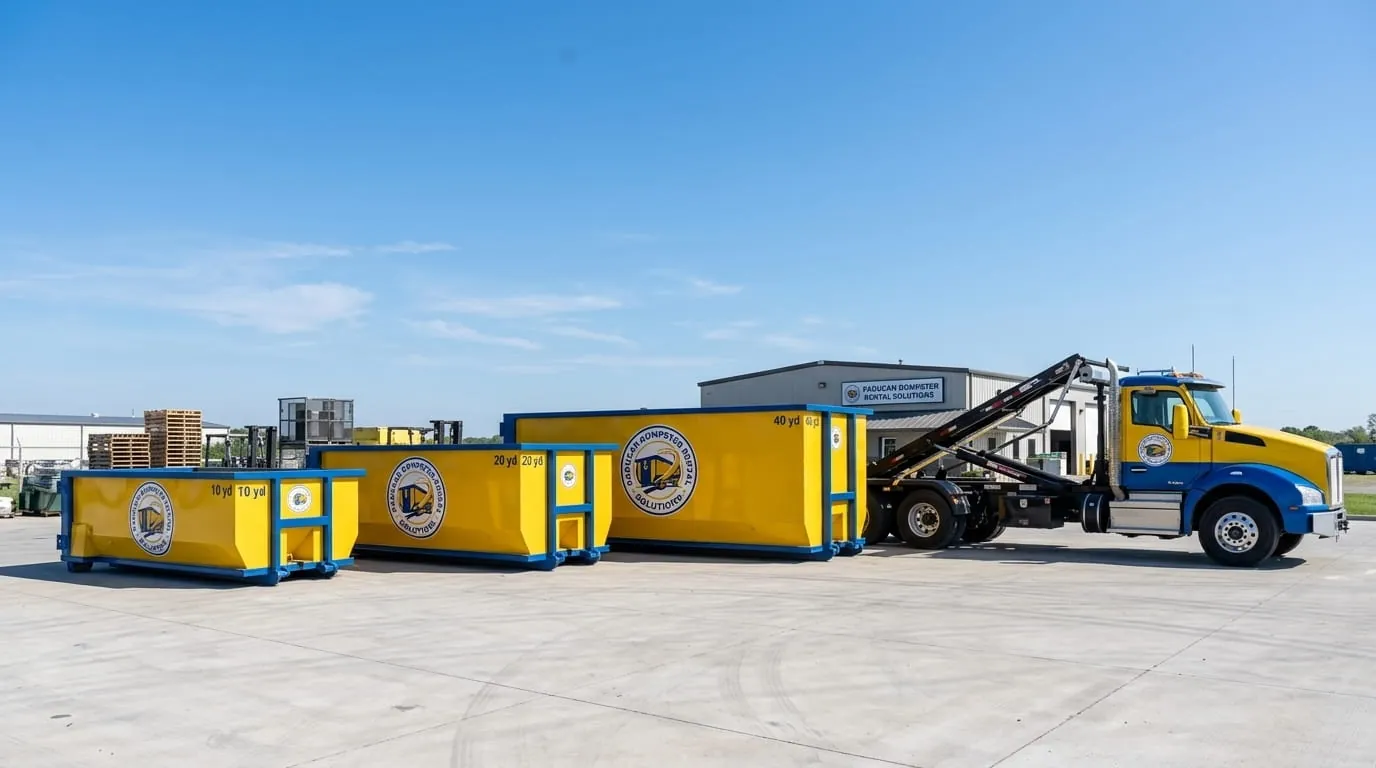
Start with the free routes
We are a dumpster company, so this may be an odd thing to lead with: for a lot of brush jobs in Paducah, you should not rent a container at all.
The city runs brush collection and a compost facility, and between them they handle the majority of ordinary household yard waste at no extra cost to you beyond what you already pay. Filling a mixed construction container with limbs means paying the mixed-debris rate per ton for material that had a cheaper route available. It is one of the most common ways people overpay.
So: exhaust the free routes first, and call us when the volume genuinely exceeds them. We would rather tell you that and get the call you actually need than take an order that was never good value.
The city compost facility
The City of Paducah operates a compost facility on North 8th Street. Trees and clean vegetation can be dropped off there during operating hours, and the finished compost is sold back to the public — which is a genuinely good deal if you are doing any planting.
Two practical points. Check the current hours before you load the truck, because they are seasonal rather than fixed. And keep the load clean: the facility is composting, so plastic bags, household trash and treated timber all cause problems.
City brush collection and MyPaducah
The city also collects brush from the kerb, with published size guidelines for how much can be set out at once. For a normal round of trimming that is usually all you need.
If your pile exceeds the guidelines — after a storm, or if you have taken out a large shrub bed — you can request a collection through Public Works or the MyPaducah service portal. That is worth knowing about, because plenty of people assume an oversized pile is simply their problem and go straight to renting a container.
Outside the city limits, McCracken County and the surrounding counties have their own arrangements, so check with your own county rather than assuming the Paducah programme applies.
When a container is the right answer
There is a real threshold, and past it a container is straightforwardly better:
- A large tree removal. One mature oak or maple produces a startling volume — far more than kerbside collection is designed for.
- A full landscape overhaul, where beds, shrubs, stumps and edging all come out at once.
- Clearing an overgrown property, which is common on estate and rental turnovers.
- Anything on a long private drive, where kerbside collection cannot reach and hauling it to the road yourself is the whole job.
- When you need it gone on your schedule rather than the collection schedule.
- Contractor work. If you hired a landscaper, the debris is generally their responsibility rather than eligible for residential collection.
Keeping a vegetation load clean
If you do rent a container for brush, the money is in keeping it clean.
Clean vegetation goes to a compost route. Contaminated vegetation goes to the mixed-debris route, which costs more per ton. The contamination that causes it is usually trivial: a few bags of household trash, some old fence panels, a bit of construction material thrown on top.
Two specific things catch people out. Plastic bags — if you bag leaves, empty them and dispose of the bags separately, or use paper yard waste bags. And soil — a large volume of dirt mixed into a brush load can push it out of spec, so if you are removing beds or stumps with a lot of earth attached, tell us and we will plan for it.
Treated timber is the other one. A fence panel or old decking is construction debris, not yard waste, even though it came out of the garden.
What counts as yard waste
Broader than most people assume:
- Grass clippings and leaves
- Garden and plant trimmings
- Hedge and shrub cuttings
- Branches, limbs and brush
- Tree trunks and logs
- Stumps and root balls, with notice
What is not yard waste even though it grew outdoors or lived in the garden: treated lumber from a deck or fence, painted or stained wood, landscape fabric, plastic edging, pots, and anything with concrete attached. Those are construction debris.
Sizing for brush
Brush is the material people misjudge most, because it does not stack. Limbs trap air, and a pile that looks like a pickup load routinely needs a 15 or 20 yard.
- Heavy trimming round, one lot: 10 or 15 yard
- Shrub bed removal: 15 yard
- One large tree: 20 or 30 yard
- Full landscape clearance: 30 yard
Two things nearly double what fits. Cut to length — four feet or so — rather than throwing whole limbs in. And load deliberately, filling the gaps rather than building a lattice.
One weight note: wet brush is much heavier than dry, and this is a humid climate. If you can let a pile dry for a few days before the container arrives, do.
Spring and storm surges
Two periods put pressure on everything at once.
Spring is predictable. Winter kill, storm-broken limbs, and the landscaping projects everyone has been planning since January all arrive in the same few weeks. Book early if you can; the first genuinely dry stretch of spring is when every container in the region is already out.
After a storm is not predictable, and the pressure is far greater. See the storm debris guide for how public collection works after a declared event and when you still need your own container.
Call and describe what you are clearing. If the free routes will handle it we will say so — and if they genuinely will not, we will put you in the right size container going to the right place.
Need a container in Paducah?
Call and describe the job. Three minutes on the phone gets you a size recommendation, a flat rate and a delivery window — and we will tell you if a smaller, cheaper container is the right answer.
Call (270) 477-4085